
Research is in our DNA
Published May 2026
Back in 2024 we launched a research project with Geolimna group at Universidad de Antioquia, and what we found surprised us. In the business world, we measure everything: revenue, costs, occupancy, customer satisfaction. If it’s not on a dashboard, it doesn’t exist. Yet in the early days, we ran Silvery without scientifically measuring what mattered most, we didn’t know whether the forest we had planted was actually working.
2024 changed everything
In a management committee meeting, I raised the point that at Silvery we were full of facts but had very little data. By then, I had already opened the conversation with the research group and we had a clear idea of how we wanted to measure the impact of nearly two decades of work at Silvery. Convincing the committee wasn’t difficult, we all share a sensitivity toward regeneration, toward leaving the planet better than we found it. And so the planning began. Manuela Merino Maya, an Environmental Engineering student at the University, became interested in the project and we began planning its execution together. We assembled a team of experts: Dr. Fabio Vélez, Dr. Néstor Aguirre, and ornithologist Adrián Escobar, a remarkable depth of expertise for this first project. Through that process, we defined the research question: how can bird diversity indicate the progress of restoration at Silvery when compared to a pasture and a reference ecosystem?
Our forest became her field study, and her second home. The results forced us to see what we thought we knew in a completely different light.


What science found
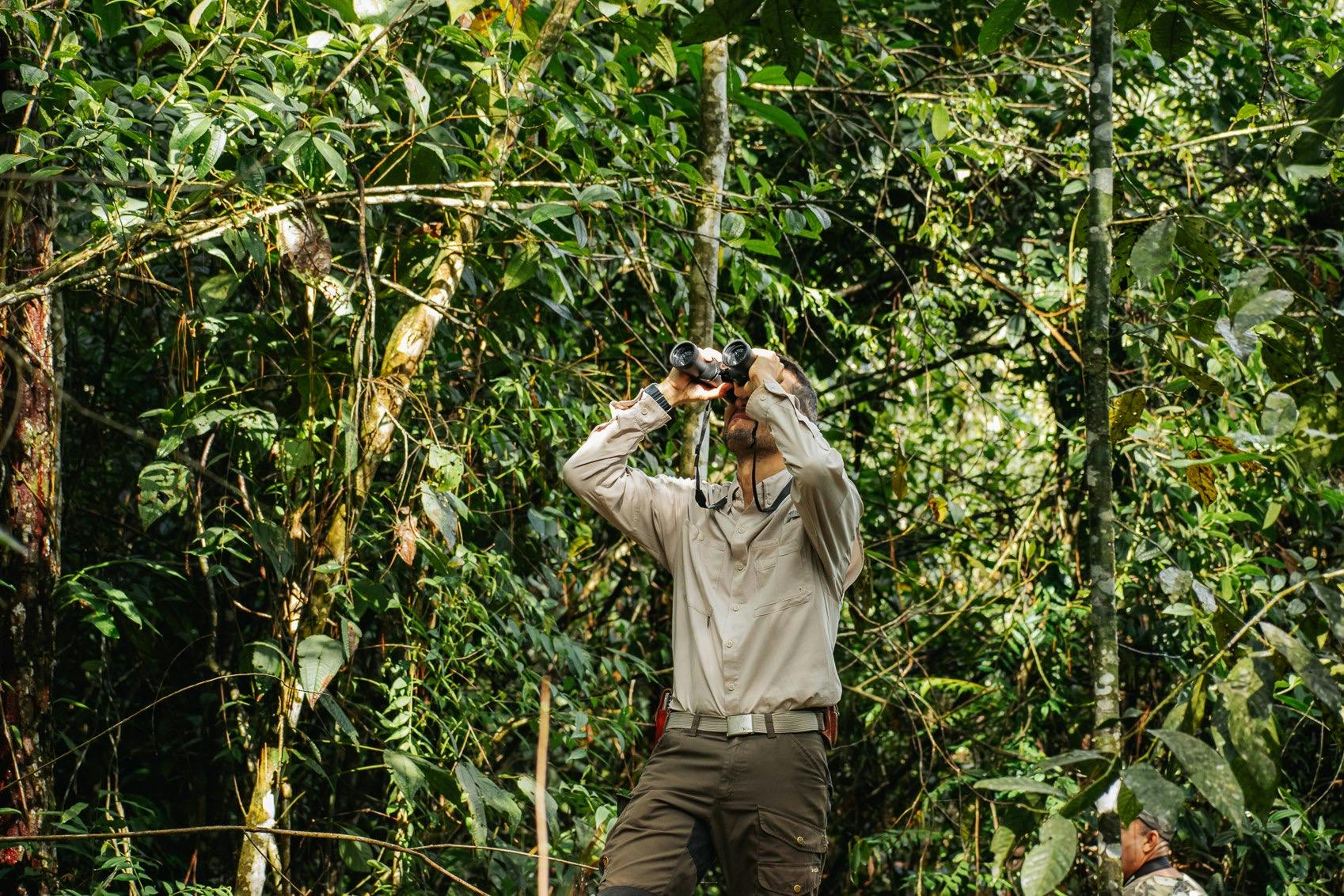
Between September and November 2024, alongside Manuela and Adrián, we covered three selected zones of the property during intensive field days, following the line transect methodology (always sampling along the same path within each zone type). The three zones were: the neighboring farm’s pasture, Silvery’s natural secondary forest, and our restored forest.
During this time, 712 individual birds were recorded across 112 species. The finding that struck us most wasn’t the total number. It was the comparison between zones. Silvery’s Restored Forest, the one we have been planting for 20 years, showed the highest species richness of the three zones (or biotopes): 75 species. This exceeded the natural secondary forest, which has gone decades without human intervention, where 58 species were documented. The pasture showed 47 species, a zone that went through the inverse process from Silvery, from forest to grassland. We did not expect these results.
Another interesting finding was the abundance of individuals documented: the pasture recorded 331 individuals, Silvery’s restored forest 223, and the secondary forest 158. That sounds counterintuitive, doesn’t it? But the answer is as simple as things should be, in the pasture, birds are easier to spot. In the forest, you need other identification methods, including audio and video recordings. And that’s exactly where we’re heading next, to refine what we’ve learned from this first project.
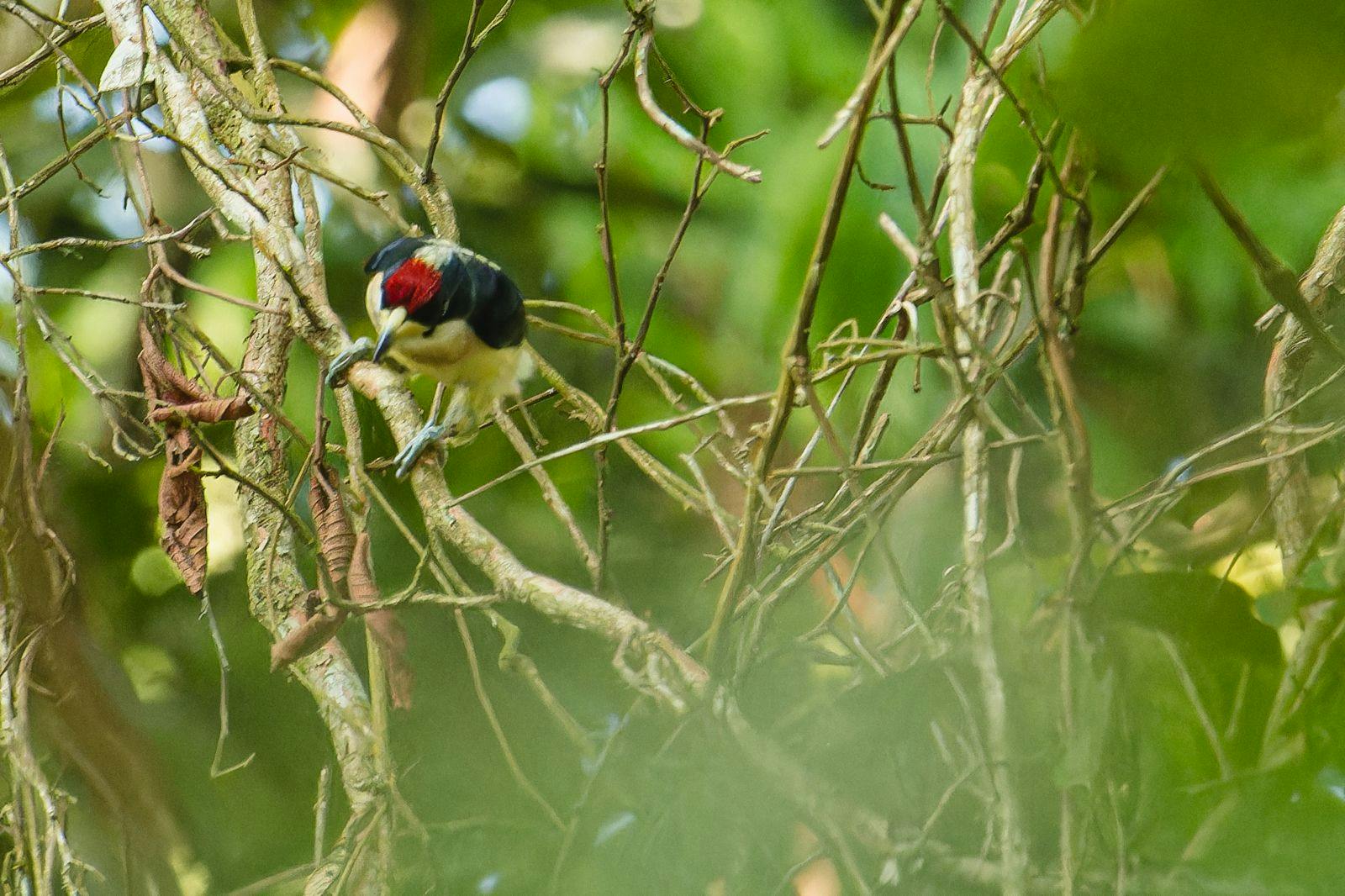
Among the most remarkable findings, three endemic species of Colombia were identified: Ortalis columbiana, Driophlox gutturalis, and Capito hypoleucus, the latter vulnerable to habitat loss. Their presence in our forest is not a minor detail: it indicates that the ecosystem already offers conditions sufficient for species that cannot tolerate degraded environments.


The birds are clearly working
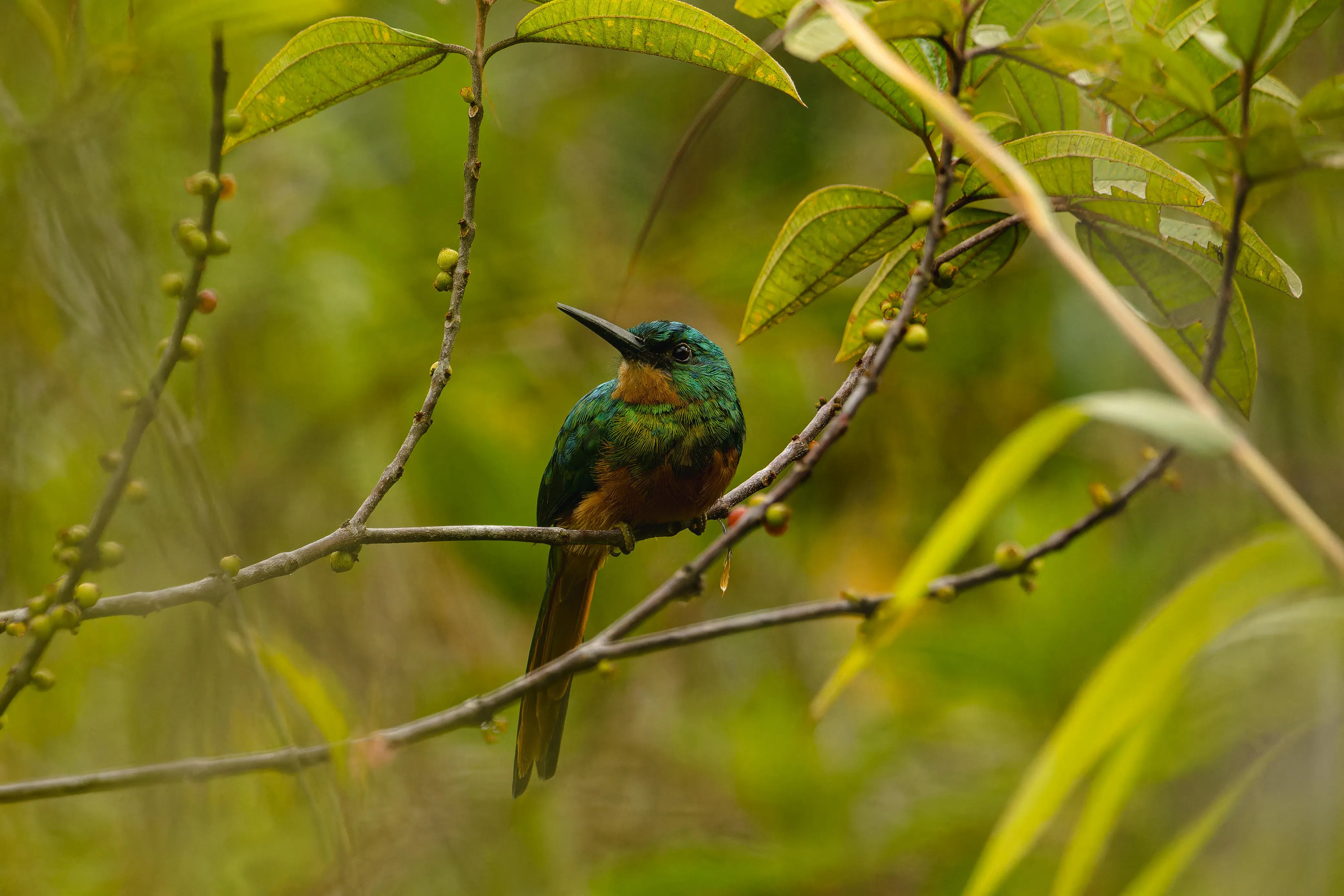
The study also evaluated ecosystem services at the landscape scale. The birds of our forest are actively dispersing seeds, pollinating, and controlling pests. Their function can be understood as biological infrastructure that keeps the regeneration cycle running.
In business terms: the forest has employees who work on the advance payment we planted, and they generate compound interest in the form of forest, even if they don’t yet appear on Silvery’s income statement, as yet.
What this means for Silvery
When we began building the cabins, we finished understanding that caring for the forest was the right decision. For years, that bet was sustained by intuition and by what we saw with our own eyes. Now we have academic evidence. Manuela’s thesis became Silvery’s first scientific biodiversity baseline. A reference point against which we will measure progress in the years ahead. We must do this because:
Regenerating without measuring is empty narrative. Regenerating with data is strategy.
Silvery is not a finished project. It is an ongoing experiment with growing rigor. If you want to understand what regeneration looks like with real evidence, not paper certifications, come to the forest.
The Andean biodiversity will be waiting for you.
___
By Edgar A. Martínez Londoño
Sanitary Engineer, MSc, PhD Environmental Engineering
Founding partner at Silvery Refugio Natural